Mental Health at Work: What the TELUS Health Q1 2026 Report Reveals to HR
June 1, 2026, In Management & Organizational Performance
The TELUS Health Q1 2026 report is clear: organizations that actively support employee well-being report lower productivity losses, reduced turnover, and better mental health scores at work. As Canadian workers have remained in the “strained” zone for over six years, with a Mental Health Index (MHI) score of 63.1 out of 100 », one lever consistently emerges from the data: workplace recognition.
1. Organizational Support and Mental Health: A Direct Link to Performance at Work

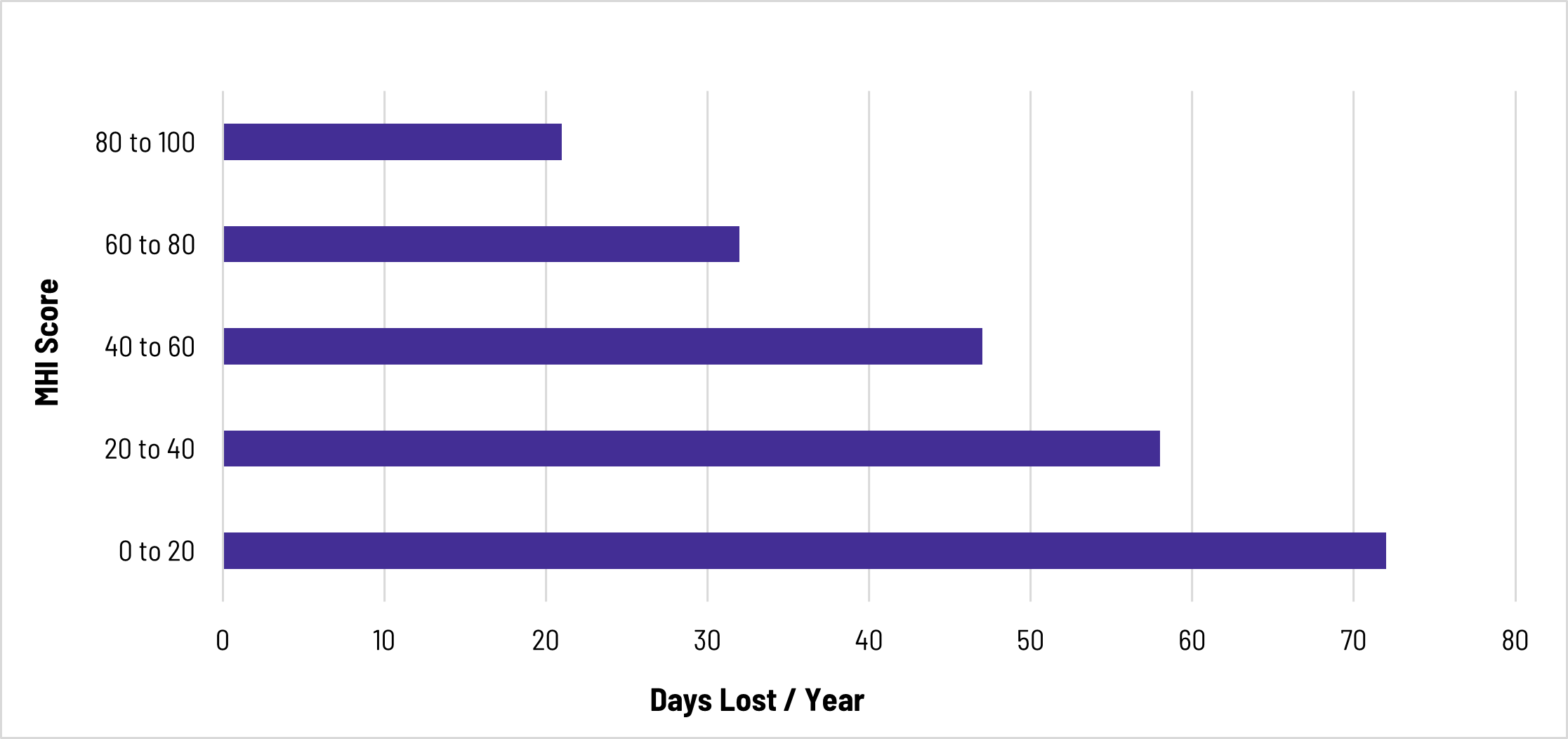
The report establishes a clear correlation between MHI scores and performance. Workers with low MHI scores can lose up to 72 workdays per year, compared to fewer than 21 for those scoring above 80.
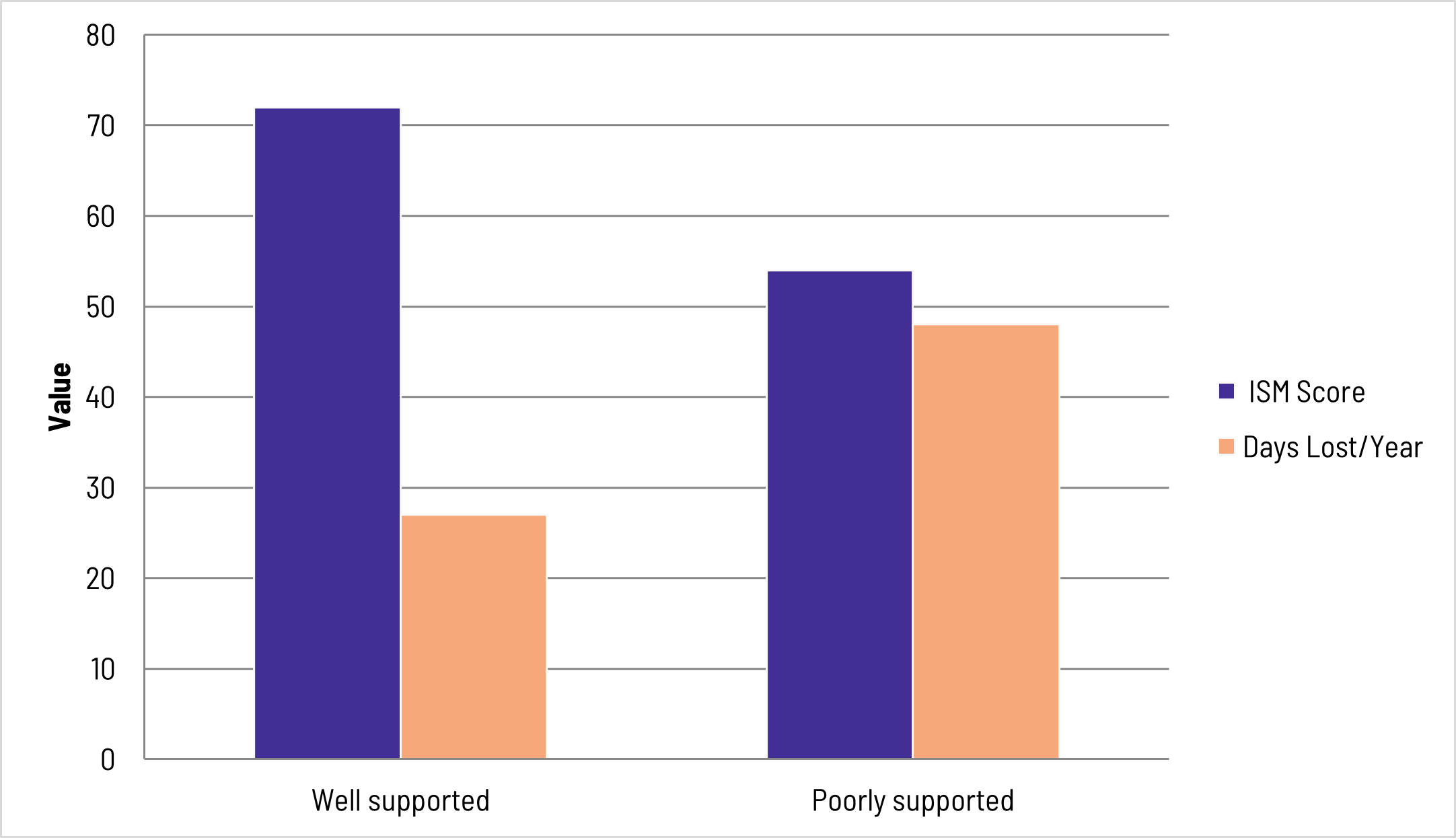
One in four workers believes their employer could better support their mental health. This group scores 54 on the MHI, 18 points below the national average, and loses 48 days of productivity per year, compared to 27 for those who feel well-supported.
Days Lost per Year by MHI Score according to Telus Health
The message is unequivocal: organizational support directly influences mental health and the ability to perform.
This support does not come only through formal programs. It is built day to day: attentive managers, accessible resources, and above all a culture where employees feel seen, recognized, and supported.
2. Anxiety and Isolation: Persistent Signals

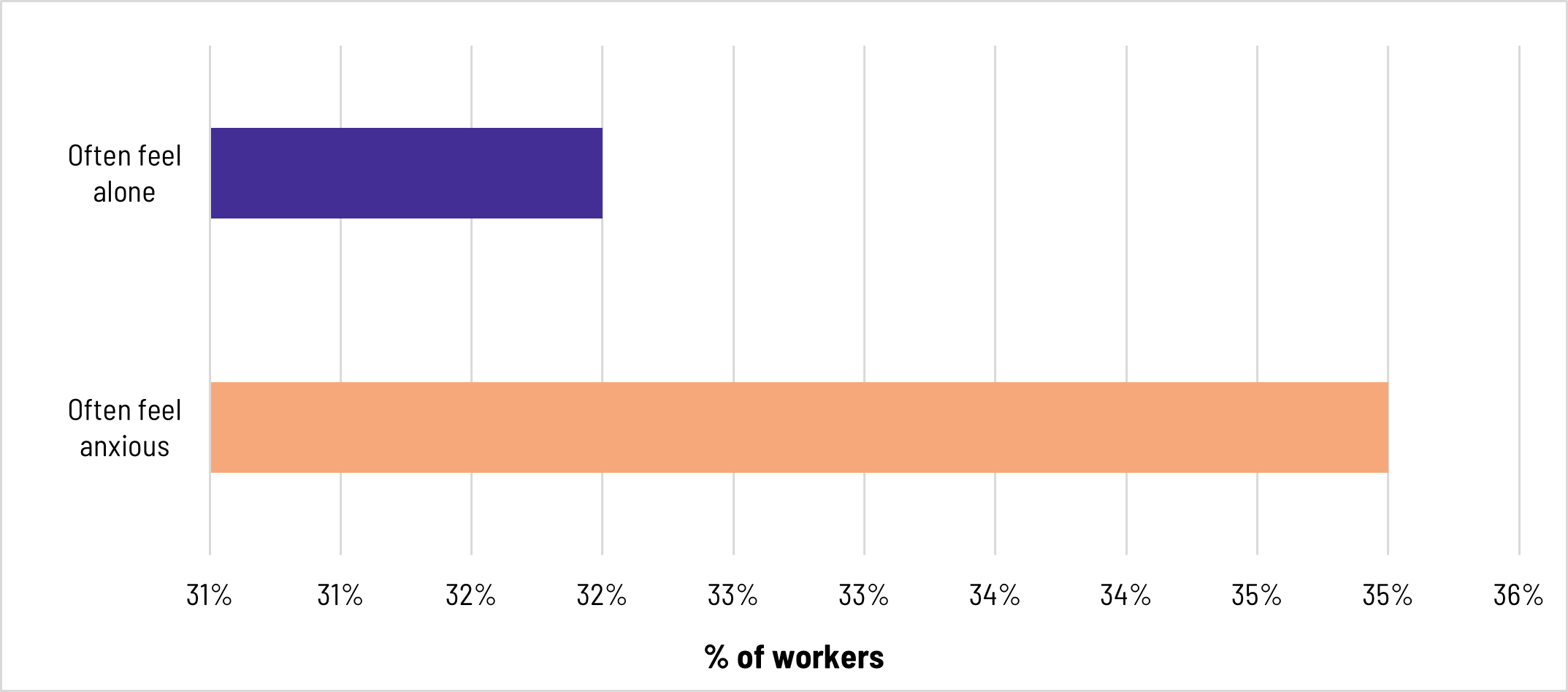
For nearly four years, anxiety and isolation have ranked among the lowest dimensions of the index:
- More than one in three workers often feels anxious
- Nearly one in three often feels alone
Anxiety and Isolation at Work according to the Telus Health Report
When employees feel invisible or disconnected, their mental health deteriorates.
Hybrid and remote work amplify this phenomenon. Fewer informal interactions, less feedback, less recognition, and therefore more uncertainty.
According to the American Psychological Association, human connection and a sense of belonging are among the essential elements of workers’ psychological health. And that sense is built notably when contributions are recognized and meaningful relationships can develop.
A peer recognition platform can help recreate these points of human connection, particularly in hybrid and remote environments.
“Belonging is a unifying force in a divided and disconnected world. It is about creating the conditions for people to connect and contribute meaningfully, be more resilient through complexity, and thrive together,” says Elysca Fernandes, Director of Human Resources and Advisory Services at McLean & Company.
Culture Is Lived Before It Is Measured
The report reveals that 60% of workers perceive their organization’s culture as supportive of their well-being, but the 12% who do not are in the “distressed” zone and lose 28 more workdays per year. A gap that carries a significant cost, and one that often widens in silence.
Culture cannot be decreed: it is lived through small, daily gestures. Formal and informal recognition, team rituals, regular feedback, moments of collective celebration. It is the accumulation of these micro-signals that shapes, day after day, the sense of well-being within your teams.
Impact of Organizational Support on Mental Health and Productivity according to Telus Health
3. Mental Health and Turnover: Why Your Top Talent Really Leaves

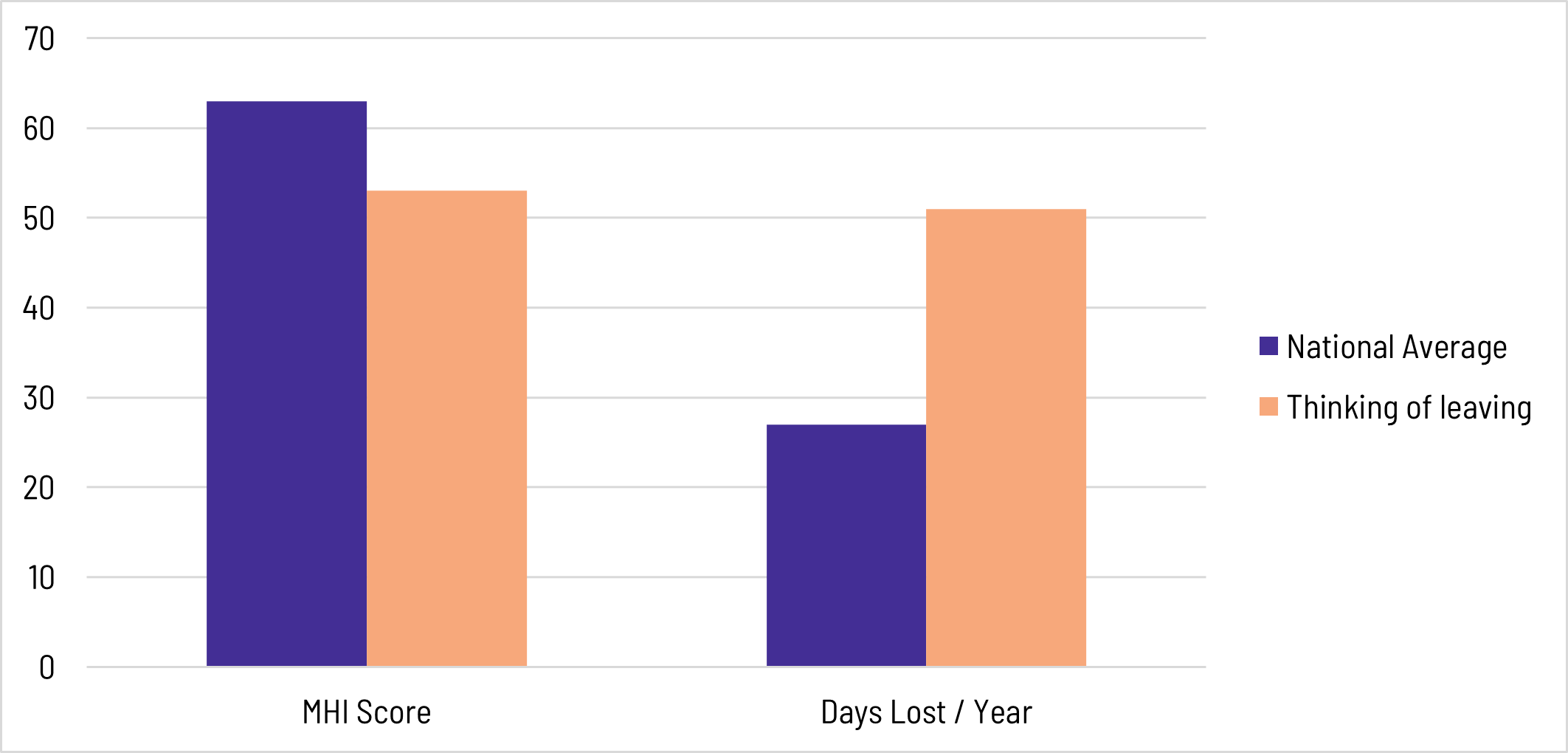
One in eight workers is considering leaving their job in Q1 2026. This group scores nearly 10 points below the national average and loses 51 days of productivity per year.
MIH Score and Productivity: Intention to Leave vs. National Average According to Telus Health
The most commonly cited reasons seem straightforward: better career opportunities (19%), higher compensation (14%), improved benefits (14%). On the surface, this appears purely economic, and in today’s context, financial pressure is very real. But reducing turnover to a compensation issue would be a mistake.
Think about it: what is a higher salary, if not a signal that an organization recognizes someone’s value and chooses to invest in it? What is a better career opportunity, if not proof that an employer believes in someone’s potential and opens a path forward? These reasons, economic in appearance, all reflect the same fundamental need: to feel recognized for one’s true worth.
A well-compensated employee can still consider leaving: because they do not feel seen, because they have been in the same role for years, because no one seems interested in where they want to go.
Salary can retain some people. Recognition engages everyone. And it can prevent someone from wanting to leave in the first place.
4. AI Adoption: A New Lens on Mental Health at Work

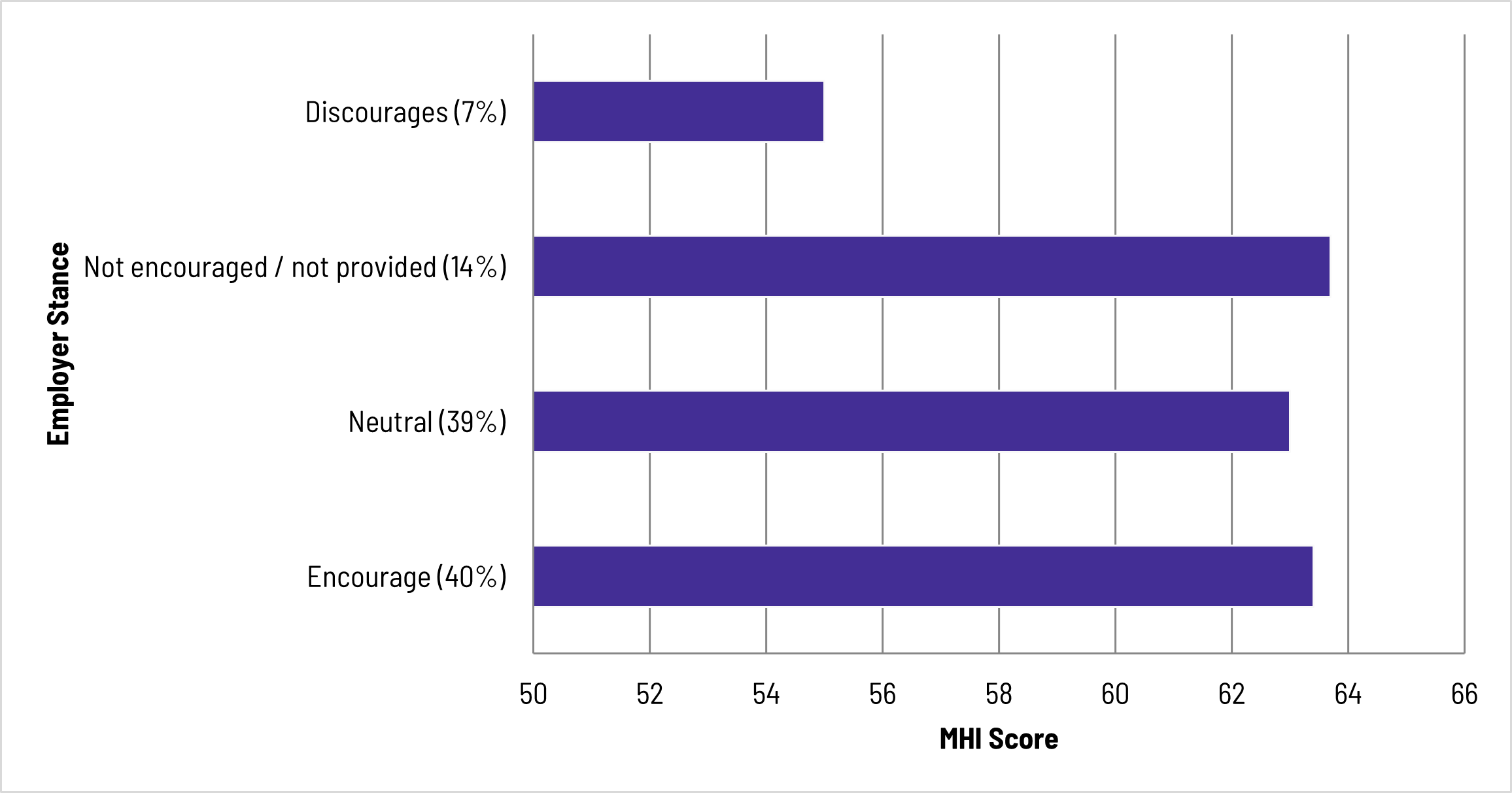
The report introduces a new section on artificial intelligence this year: 40% of employers encourage its use, and 56% of users report improved efficiency.
But an important nuance emerges it is not the adoption of AI that is associated with lower mental health scores, but its active discouragement by some employers. The 7% of workers in this situation score 55 on the MHI, eight points below the national average. Not being included in the transformation sends a devastating implicit message: you have no place in the future of this organization.
Including teams in this evolution, giving them access to tools and training, is in itself a concrete act of recognition.
MHI Score by Employer Stance on AI according to Telus Health
The Fear of Becoming Obsolete
In addition to these findings, and although this dimension is not addressed in the TELUS report, another angle deserves attention.
Even where AI is encouraged, a more diffuse anxiety can take hold. Some researchers and practitioners refer to this as FOBO (fear of becoming obsolete): not the fear of losing one’s job, but the persistent worry that skills built over many years are gradually losing their value.
This anxiety contributes to a progressive disengagement, often invisible. Recognition plays a key role here: by valuing not only performance, but also learning, curiosity, and adaptability, organizations can help transform this worry into confidence. Recognizing growth sends a powerful signal: here, evolving matters.
In Conclusion: Recognition as a Structural Lever to Improve Mental Health at Work

What the TELUS Health Q1 2026 report confirms is that mental health at work is not solely an individual well-being issue. It is also a performance, retention, and organizational transformation issue.
And across all the dimensions analyzed, the same factor keeps emerging: recognition. Not as a one-time gesture at an annual gala or a performance review, but as a practice woven into the daily fabric of organizational life.
Organizations that structure recognition as a continuous lever have more engaged, more connected, and more stable employees. Those that do not often pay the price without ever identifying the cause.
For HR professionals, this data represents a concrete opportunity to engage in strategic dialogue with leadership. The question is no longer whether recognition has an impact, but whether it is integrated as a structural lever of organizational health.
Source: TELUS Health, Mental Health Index — Canada, Q1 2026. Data collected between February 25 and March 9, 2026, from 3,000 Canadian workers. Full report available at telushealth.com
The Author

Alexandra Thibaudeau
Marketing Project Manager
Passionate about the world of communications and marketing, Alexandra joined the Altrum team in 2023 with nearly 8 years of solid experience in the field. She implements innovative strategies and creates customized tools to help companies inspire and celebrate their employees.