Retention Doesn’t Start When an Employee Wants to Leave
September 25, 2026, In Employee Engagement
As the end of the year approaches, many organizations are already planning their HR priorities for the coming months. It’s also a period when many employees step back to reflect on their career path, their goals, and where they want to go next.
With the new year approaching, some workers begin questioning their future, exploring new possibilities, or simply wondering whether they’re still in the right place. But this reflection doesn’t necessarily lead to a job change.
In the current economic context, many employees choose to stay put, even when they’re questioning their professional future. Opportunities are scarcer, and market uncertainty pushes some workers to prioritize stability.
According to Statistics Canada, 6.1% of permanent employees planned to leave their job in the next 12 months in January 2025, compared to 6.9% in January 2024.
Fewer departures, yes. But this reality raises a new question for organizations: are the employees who stay truly invested in their role, or are they simply staying because changing jobs feels more complex in the current context?
Because retaining employees isn’t just about limiting departures. It’s also about creating the conditions that make employees want to stay, contribute, and invest in their work.
The New Retention Challenge: Employees Who Stay Without Being Fully Invested

Staying with an organization doesn’t automatically mean feeling valued or connected to one’s work.
According to Gallup’s State of the Global Workplace 2025, only 20% of employees worldwide say they are engaged at work, a decline from the previous year. This drop comes alongside a decrease in employee well-being and an estimated productivity loss of $438 billion USD for the global economy.
This data is a reminder that an employee who is present isn’t necessarily a motivated one.
For HR teams, this represents a significant challenge. An employee who stays without being truly invested can impact productivity, collaboration, and the overall team dynamic.
Recognition is one of the levers that helps strengthen the relationship between employees and their organization. When it’s regular, authentic, and integrated into daily management practices, it contributes to creating an environment where employees feel seen and where their contributions are valued.
It’s not just about celebrating major achievements — it’s also about recognizing the efforts, behaviors, and contributions that move the organization forward every day.
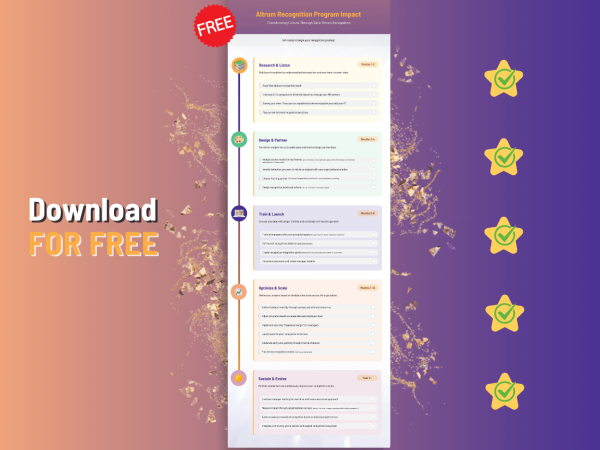
Download our practical guide.
Retention Also Runs Through Frontline Managers

In any conversation about talent retention, managers play a central role. After all, an employee’s daily experience is largely shaped by their relationship with their direct supervisor.
Year-end and the start of a new year are often periods when organizations announce promotions or role changes. High-performing employees step into management positions, often because they excel in their field.
But excelling technically doesn’t automatically prepare someone to mobilize a team.
Recognizing each person’s contributions, providing constructive feedback, creating an environment where employees feel valued, these are skills that are learned.
Without proper training, new managers risk simply reproducing the practices they’ve experienced, whether effective or not, rather than developing approaches suited to their new role.
Training managers in recognition therefore becomes a concrete lever for supporting retention and creating a positive employee experience from the very first months.
Three Questions to Ask Before the New Year

Before facing turnover or disengagement challenges, take a moment to assess your practices:
- Do your managers regularly recognize employee contributions, or only during annual reviews?
- Are new managers receiving the tools they need to motivate and value their team?
- Do your employees have frequent opportunities to receive recognition, both from their manager and from their peers?
These questions may seem simple, but they often quickly reveal opportunities for improvement.
Find out with our free self-assessment guide.
Recognition: An Investment in Long-Term Retention

Retention isn’t just about the moment when an employee is thinking about leaving. It’s built through daily interactions, the quality of leadership, and an organization’s ability to make employees feel like they matter.
Organizations that invest in recognition aren’t just looking to reduce turnover. They create an environment where employees want to contribute, collaborate, and be part of collective success.
Planning your HR initiatives for the coming year is the ideal time to reflect on the practices that will strengthen this connection with your teams.
At Altrum, we help organizations build a lasting culture of recognition. Whether you want to train your managers or implement a structured recognition program, our solutions help you create experiences that strengthen the bond between your employees and your organization
→ Discover our recognition solutions
→ Explore our training offerings

The Author

Alexandra Thibaudeau
Marketing Project Manager
Passionate about the world of communications and marketing, Alexandra joined the Altrum team in 2023 with nearly 8 years of solid experience in the field. She implements innovative strategies and creates customized tools to help companies inspire and celebrate their employees.